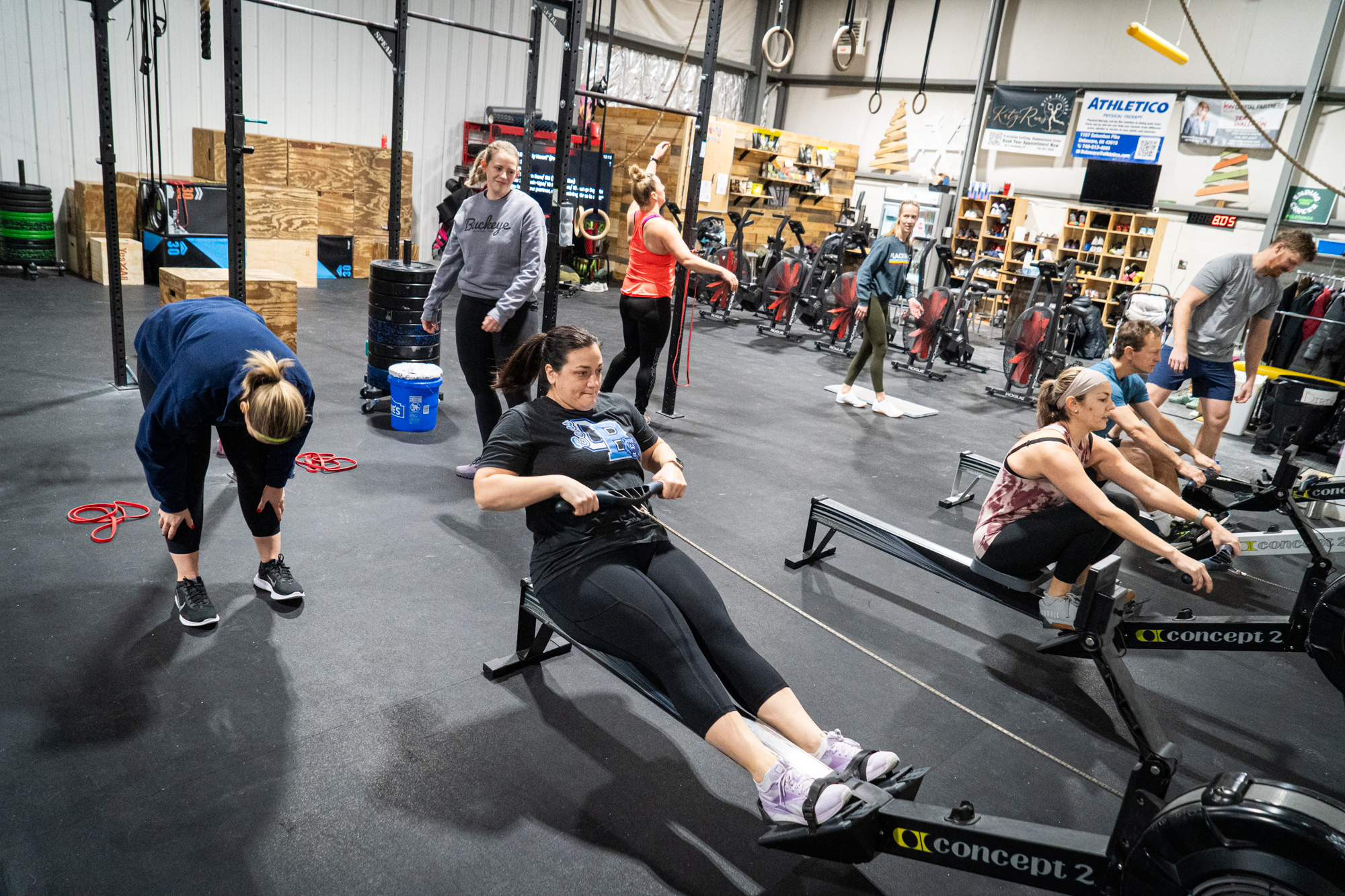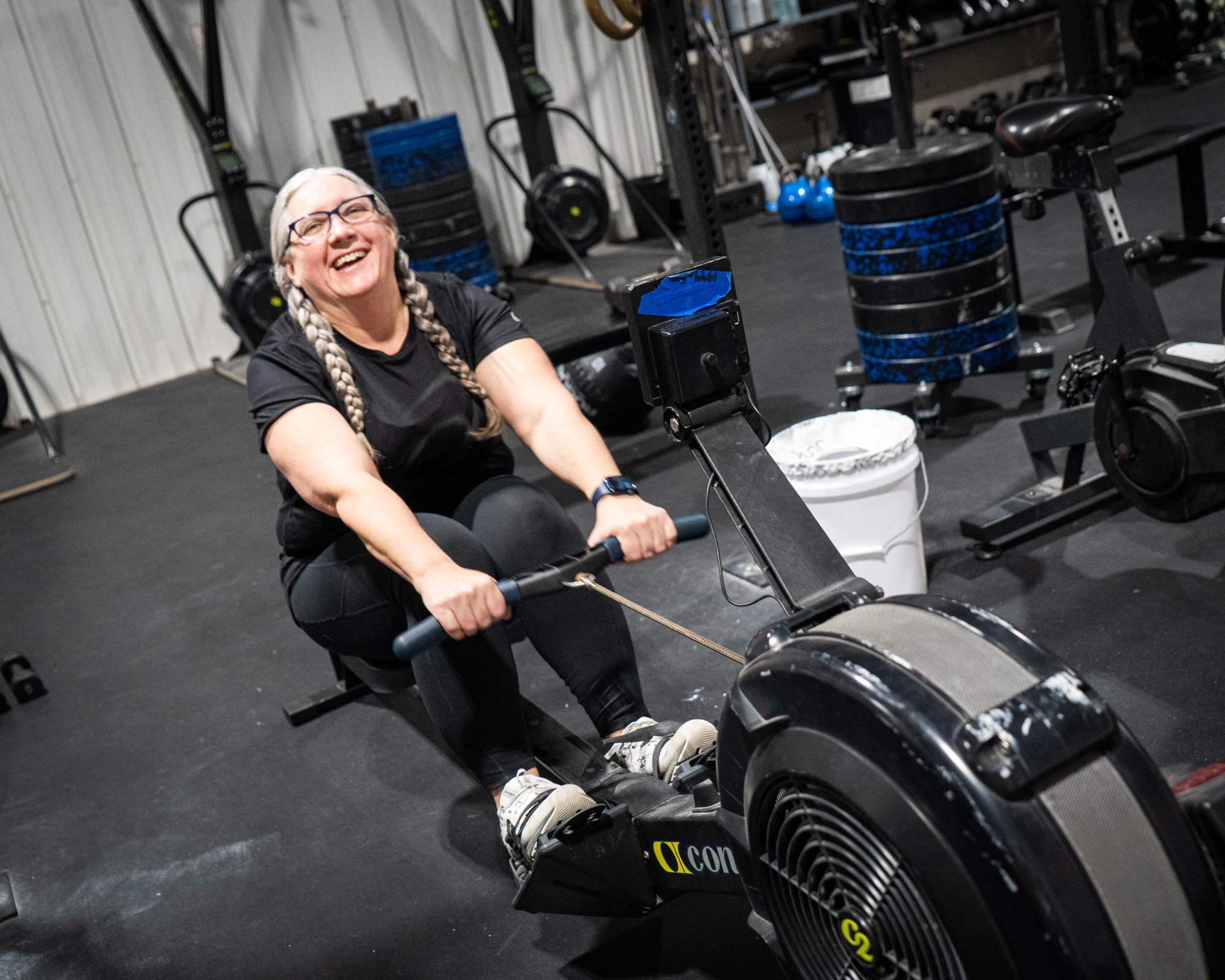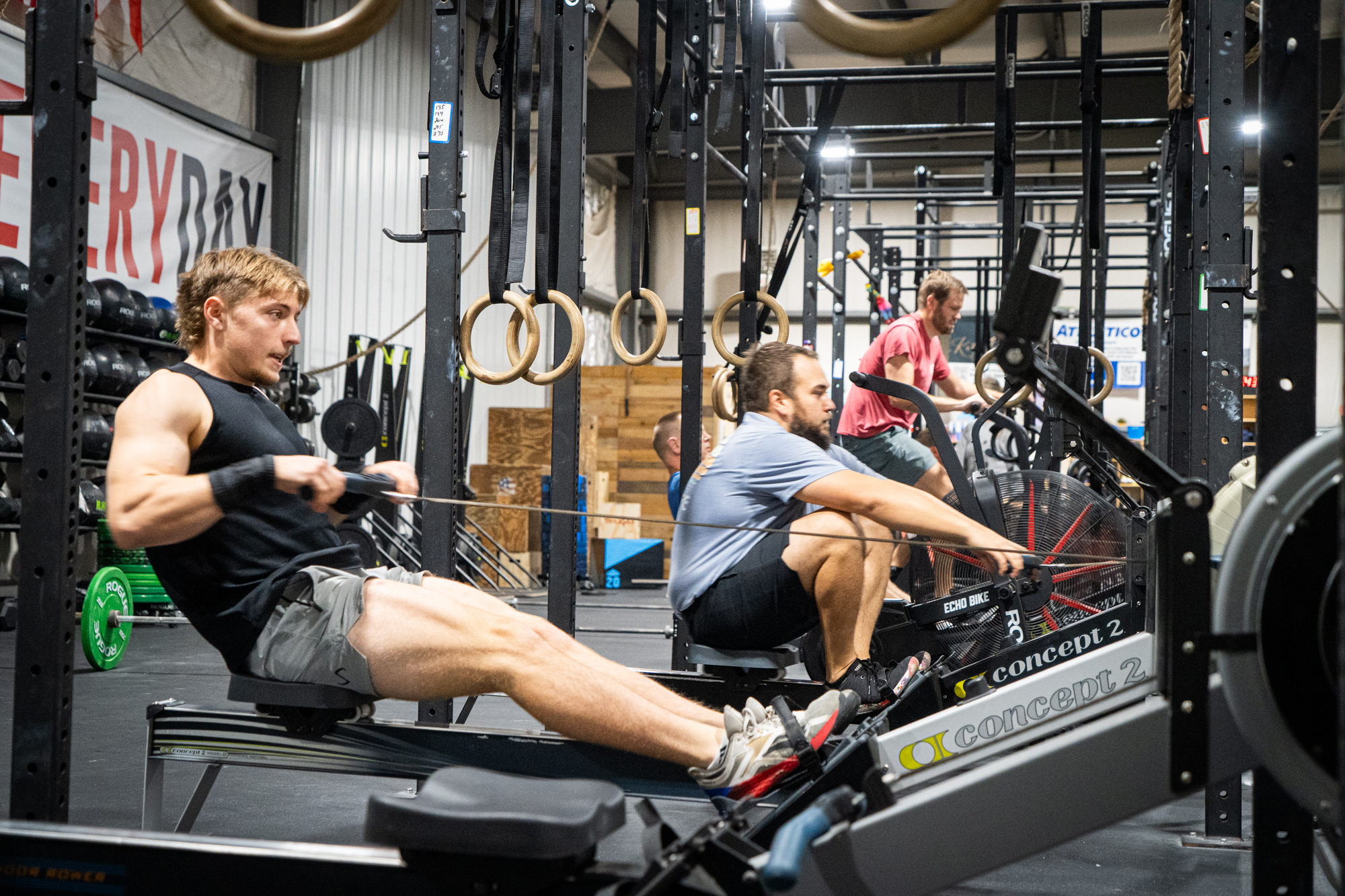

Rowing is one of the most effective full-body conditioning tools we use in CrossFit—but only when it’s done correctly. Good technique allows you to generate more power, row faster, and protect your back and shoulders, while poor technique leads to wasted effort and discomfort.
Here’s a simplified breakdown of the key rowing fundamentals we focus on at Delaware Fit Factory.
Everything begins with a solid setup before the first stroke.
Feet: Straps should sit over the widest part of your foot, allowing your heels to stay connected as much as possible.
Seat: Get comfortable and balanced on the seat—no need to overthink it.
Handle: Hands wide enough to stay relaxed, palms down, with a loose grip. The arms guide the handle; they don’t dominate the stroke.
A good setup sets the stage for consistent, powerful movement.
The catch is the moment where you change direction—from recovery to drive.
Key positions at the catch:
From here, you’re loaded and ready to push.
Rowing power comes from sequence, not speed.
At the release (the end of the stroke):
To reinforce good mechanics, think about pausing and feeling each phase:
Legs → hips → arms.
That order matters.
Stroke rate is simply how many strokes you take per minute—but more strokes doesn’t always mean faster rowing.
A lower stroke rate with:
…often produces more power and a faster pace.
A higher stroke rate usually means:
You can row fast with a high stroke rate—but it’s inefficient and tiring. The goal is to push hard with the legs and be patient on the way back.
Good rowing technique allows you to:
If rowing feels exhausting or uncomfortable, it’s often a technique issue—not a conditioning issue.
Small adjustments make a big difference. Row with intention. Drive with the legs. Stay patient.
Want to Take Your Rowing to the Next Level? Join Us!
We’re hosting a FREE Rowing Clinic at Delaware Fit Factory where we’ll break down everything covered here—and more.
📅 Sunday, January 4
⏰ 12:00 PM
📍 Delaware Fit Factory
This clinic will cover proper setup, stroke mechanics, pacing, and how to read the monitor so you can row faster, more efficiently, and with less strain.
Best part? It’s open to everyone—you do not need to be a DFF member to attend.
Whether you’re brand new to the rower or looking to clean up your technique, this is a great opportunity to sharpen your skills and row with confidence.