
Few movements in fitness are as powerful—or as misunderstood—as the squat.
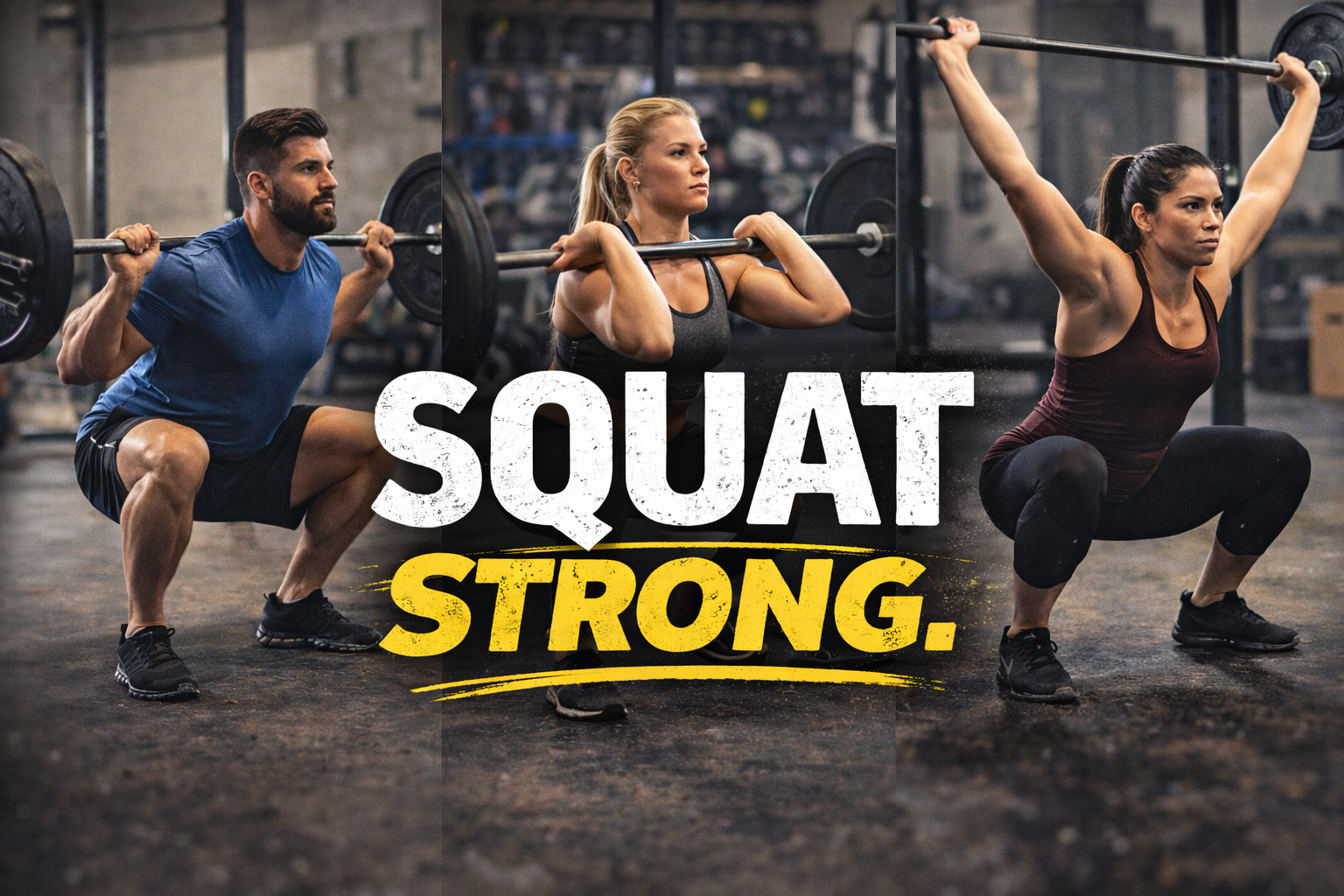
Squats show up everywhere. Air squats in warm-ups. Front squats in strength sessions. Back squats for building serious power. Overhead squats for stability and mobility.
Different movements. Different loading.
But here’s the key point:
A squat is still a squat.
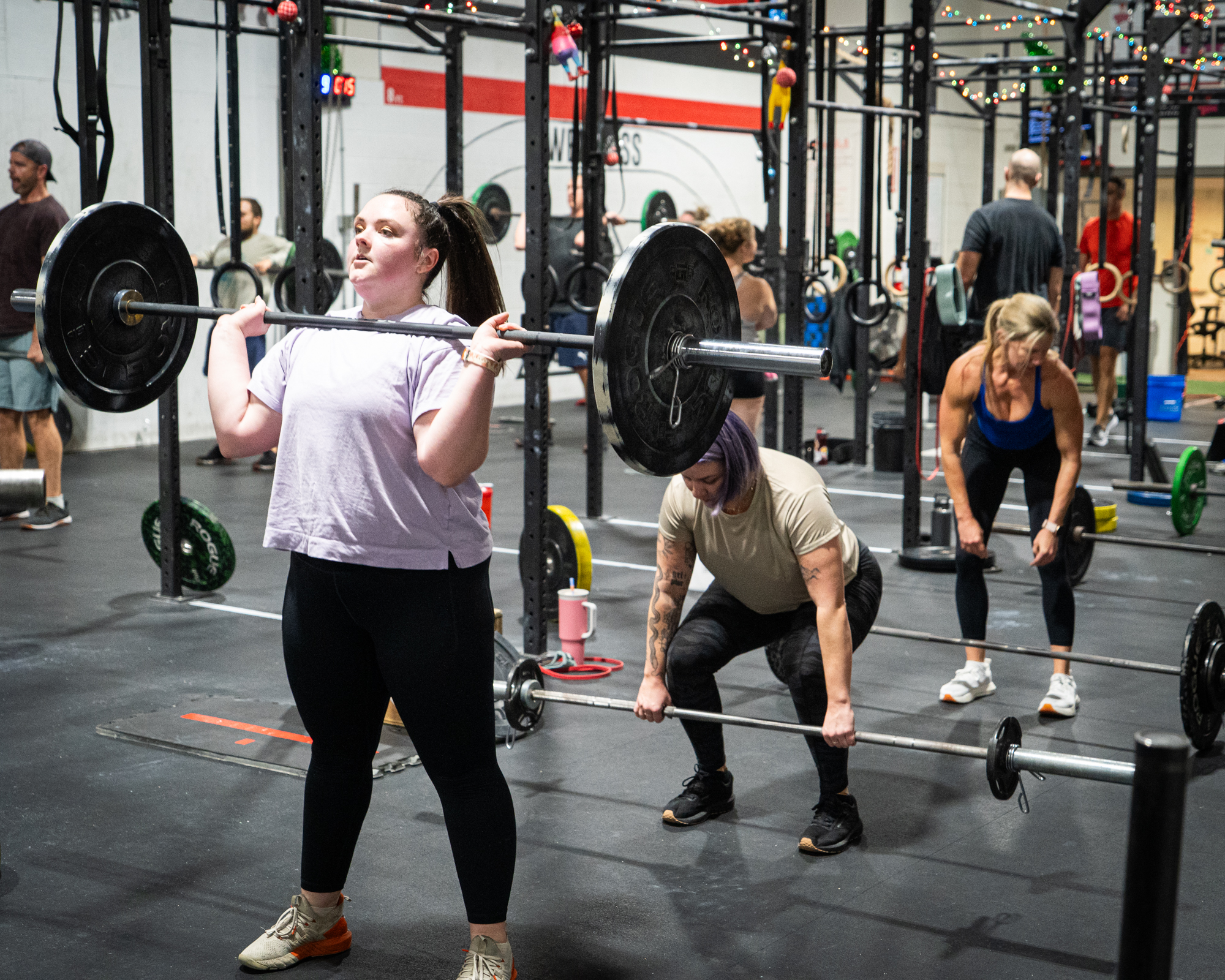
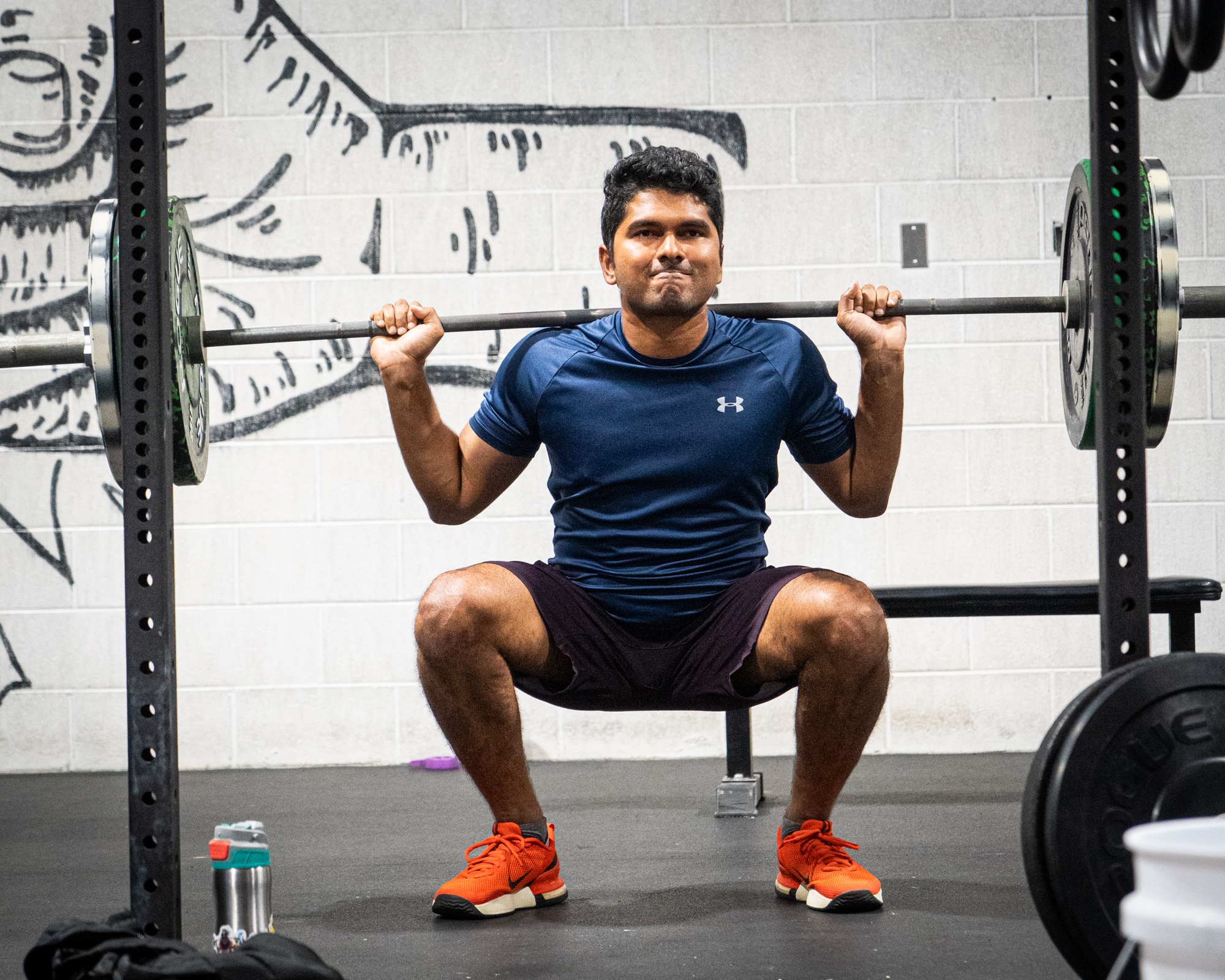
Whether you’re holding nothing, a barbell on your back, dumbbells in the front rack, or a PVC overhead, the mechanics of the squat should look remarkably similar.
And when we get this right, we build stronger legs, stronger cores, healthier joints, and better movement patterns that carry over to everyday life.
Let’s break it down.
The squat is one of the most foundational human movements.
You squat when you sit down.
You squat when you stand up.
You squat when you pick something up off the floor.
It’s not just an exercise—it’s a pattern your body was designed to perform.
A strong squat improves:
But all of those benefits depend on good mechanics.
One of the biggest misconceptions people have is that different squat variations require completely different techniques.
They don’t.
Your air squat, front squat, back squat, and overhead squat should look almost identical from the hips down.
The key mechanics remain the same:
The squat starts with the hips.
You sit back slightly and then drive straight down between your heels. This loads the powerful muscles of the hips and posterior chain.
Your knees should push out and track over your toes. This keeps the squat stable and allows you to reach proper depth safely.
Knees collapsing inward is a common error and something our coaches are always watching for.
Your balance should remain centered over the middle of your foot.
Not on your toes.
Not on your heels.
Mid-foot.
Your torso should stay upright relative to the squat variation.
In a back squat you’ll lean slightly forward.
In a front squat you’ll stay more upright.
In an overhead squat you’ll be even more upright.
But the core stays braced and the chest stays proud.
When you add a barbell or a kettlebell, the goal isn’t to reinvent the squat.
It’s to maintain the same solid movement pattern while managing a new load.
Your body shouldn’t suddenly:
If your mechanics change drastically when weight is added, that’s a sign the load may be too heavy—or the movement needs refinement.
This is exactly why coaching matters.
You’ll often hear the phrase “full range of motion.”
And that’s important.
A proper squat reaches below parallel, meaning the crease of the hip drops below the top of the knee.
This range of motion:
But here’s the important distinction:
Not everyone can squat below parallel immediately.
You might have:
In these cases, it is perfectly acceptable—and often smart—to modify depth.
That might mean:
At Delaware Fit Factory, we modify movements like this every day.
Safety always comes first.
The real issue isn’t modified range of motion.
The real issue is cutting range of motion because the weight is too heavy.
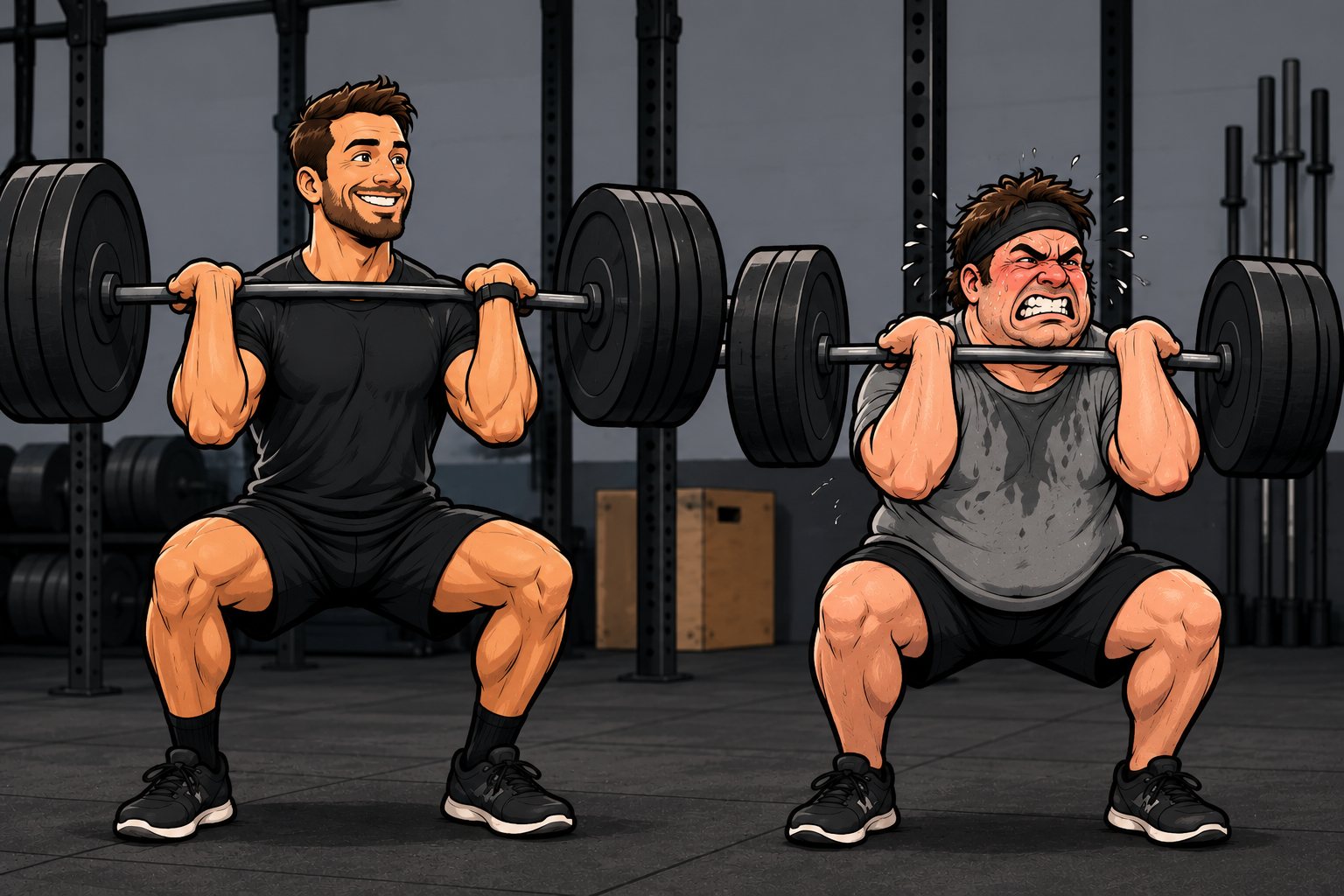
You’ve probably seen it before:
The squat starts deep.
The weight goes up.
Suddenly depth disappears.
Now it’s a quarter squat.
This usually happens when someone prioritizes weight on the bar over quality movement.
Over time, that approach leads to:
In other words, ego lifting works against you.
We care much more about how you move than how much you lift.
Strength built through full range of motion will always outperform shortcuts.
Good squats take time to develop.
They require:
That’s why our coaches constantly work with members on:
Small adjustments today lead to big strength gains tomorrow.
The squat is one of the best tools we have for building strength and resilience.
But the key is doing it well.
Remember:
1. A squat is a squat.
Air squats, front squats, back squats, and overhead squats should all follow the same core mechanics.
2. Full range of motion matters—but safety matters more.
Modify depth when necessary for legitimate limitations, but don’t shorten your range just to lift heavier.
Train with intention.
Move with quality.
Build strength that lasts.
And if you’re ever unsure about your squat mechanics, that’s exactly what our coaches are here for.